Everything you need to know
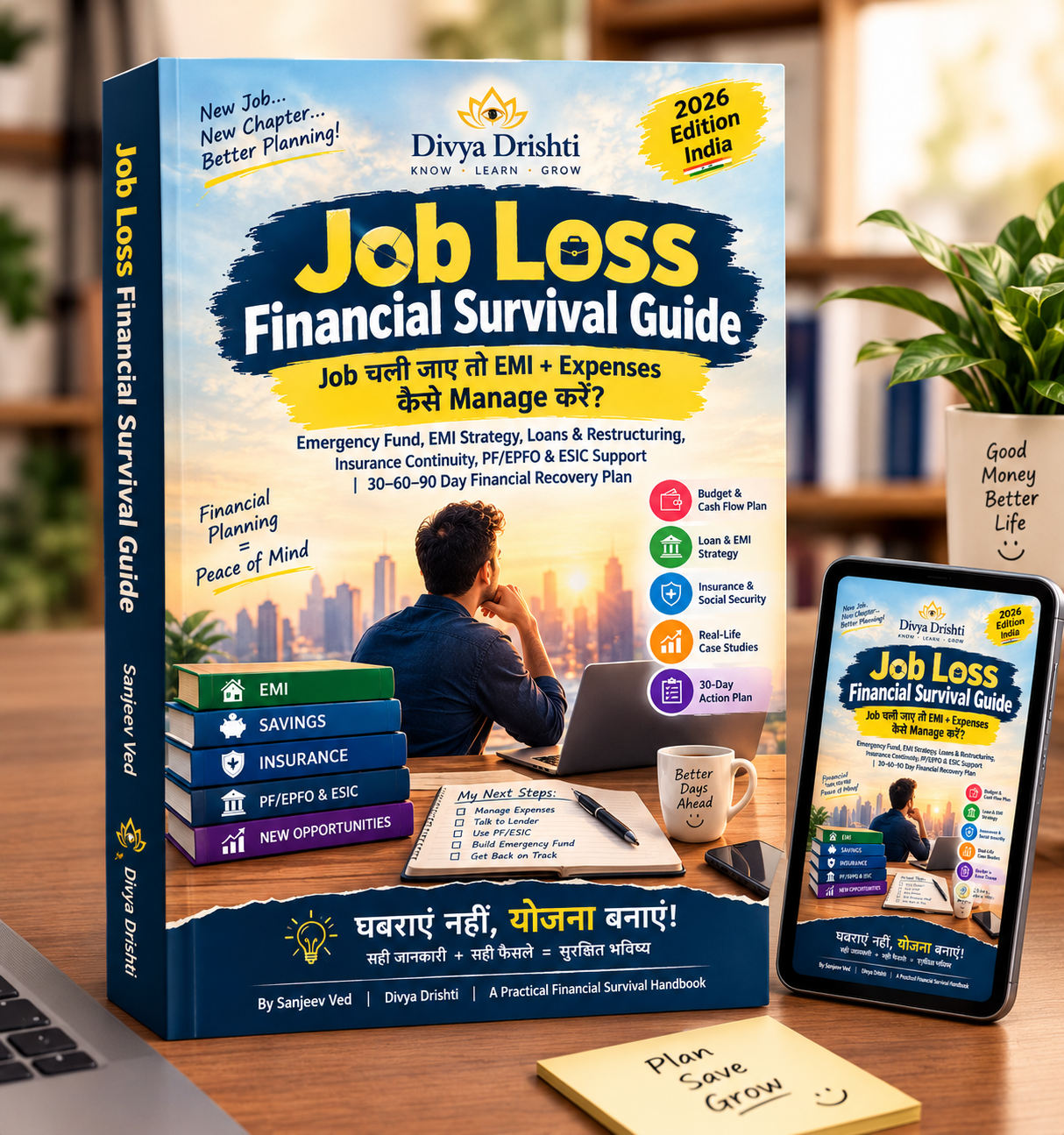
JOB LOSS FINANCIAL SURVIVAL GUIDE is a practical step-by-step handbook designed for Indian individuals and families facing the financial shock of job loss.
When a job suddenly disappears, the biggest fear is often immediate: EMI kaise bharenge? Ghar kaise chalega? Insurance ka kya hoga? PF kab use karein? This book turns that panic into a structured financial process: Clarity → Priority → Action → Survival → Recovery.
The book begins with the First 24 Hours Financial Checklist, helping readers calculate available cash, list every EMI and due date, identify essential expenses, check insurance, secure employment documents, and understand employer dues before making major financial decisions.
A key feature is the Financial Triage System, which divides expenses into three levels:
LEVEL 1 — MUST PAY
Essential food, rent/home-loan EMI, utilities, medicines, insurance and other critical expenses.
LEVEL 2 — SHOULD MANAGE
Expenses and loans where lender communication or temporary adjustments may be possible.
LEVEL 3 — STOP/PAUSE
Subscriptions, dining out, unnecessary travel, gadgets, lifestyle upgrades and other non-essential spending.
The book also introduces a 30/60/90-Day Survival Plan, moving from immediate cash preservation and job search to expense optimisation, lender communication, temporary income and longer-term financial recovery.
One of the most useful tools is the Financial Runway Calculator:
Available Emergency Money ÷ Essential Monthly Expenses = Approximate Survival Months
The book provides examples showing how savings, expenses, EMI restructuring, rent reduction and temporary income can change the number of months a family can survive financially.
The EMI section explains why all loans should not be treated equally. Secured loans such as home and car loans receive higher priority because of collateral risk, while personal loans, education loans, credit-card dues and BNPL require case-by-case action and lender communication.
Readers also learn how to approach banks/NBFCs regarding restructuring, rescheduling, refinancing, settlement and loan closure, including the potential cost and credit-report implications of each option.
The book covers credit-score protection, credit-card emergency strategy, PF/EPFO considerations, ESIC unemployment support, health-insurance continuity, life-insurance premiums, rent and household expenses, family communication, temporary income options, tax and final settlement documents.
It also includes six fictional illustrative Indian case studies covering different financial situations—from low savings and personal loans to home loans, credit-card debt, family medical expenses and PF/ESIC considerations.
The book finishes with a 30-Day Money Reset Challenge, Job Loss Financial Dashboard, document checklist, 15 Myths vs Facts, 25 Questions After Job Loss, and a 90-Day Plan for after getting a new job.
Core message:
Job loss does not mean financial life is over. Panic nahi—process follow kijiye.
Important: The ebook itself states that it is general self-help/educational guidance, not legal, tax or financial advice. Current EPFO, ESIC, RBI, insurance and tax rules should be verified from official sources before taking major decisions.